Steady and Grounded: Tahirih’s First Streetlifting Competition
Tahirih’s journey to the RVA Classic: See how she conquered her first Streetlifting competition in the -70kg division by prioritizing steady, grounded training.
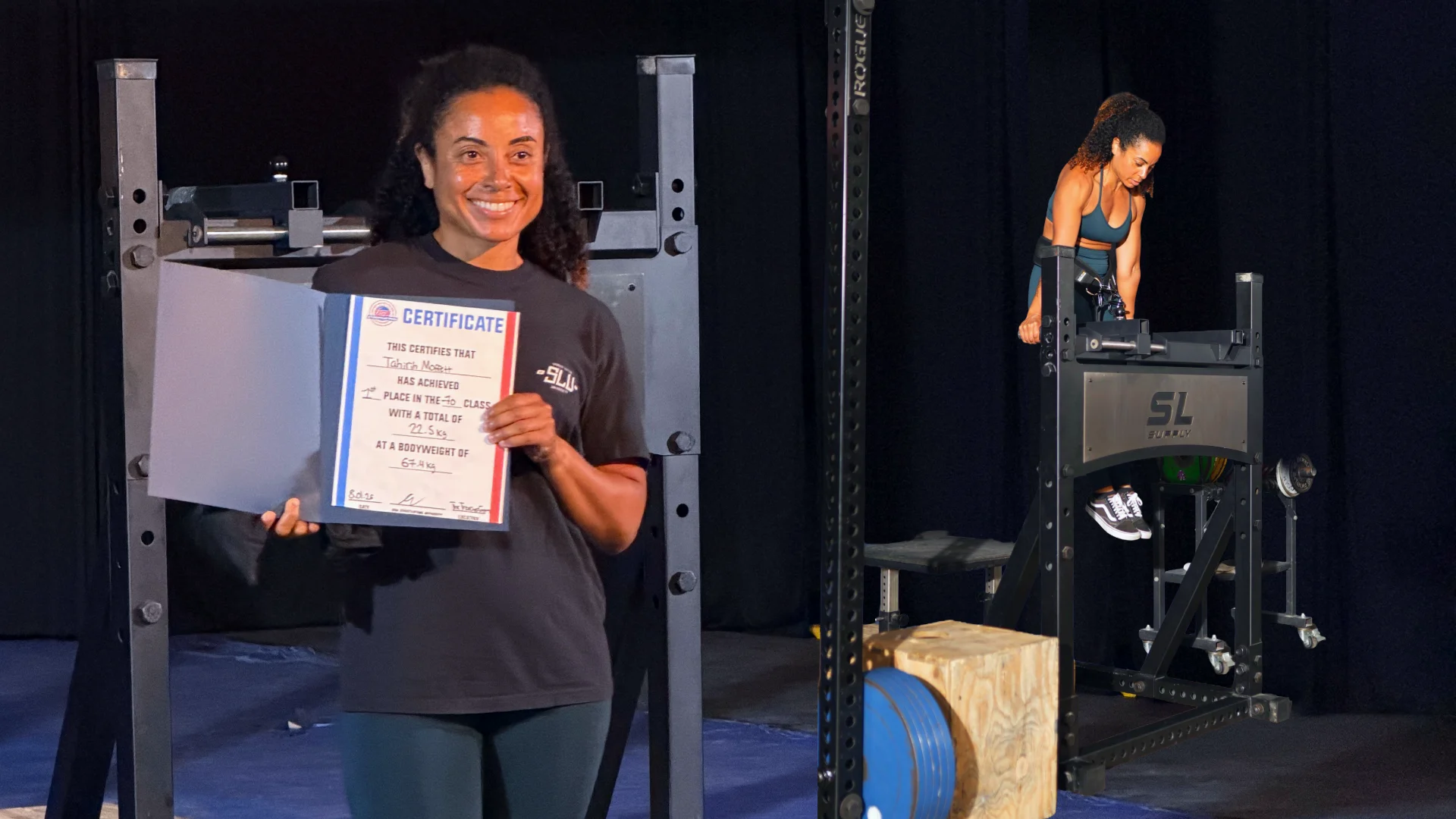
Tahirih noticed the other athletes’ opening attempts.
Some of the women around her were starting with more weight than she was.
It would have been easy to look at the numbers and start comparing. Instead, Tahirih was excited to be there. Her first competition was not about proving she was the strongest person on the platform. It was about stepping onto it, hearing the commands, and finding out what happened when the work she had put in finally had somewhere to go.
By the end of the day, she had gone six-for-six.
She had set personal records on both her weighted pull and weighted dip.
More importantly, she left the RVA Classic feeling exactly how she had hoped she would.
“Very steady and grounded.”
That feeling did not come from having everything figured out. It came from months of learning how to trust a process, including the parts that felt slower than she wanted.
Competition Stats:
Format: Classic (Weighted Pull and Weighted Dip)
- Attempts: 6 for 6 (Perfect completion)
- Weighted Pull: 13.75 kg (Personal Record)
- Weighted Dip: 8.75 kg (Personal Record)
Finding Streetlifting
Tahirih found streetlifting in October 2025.
At the time, she had been practicing pull-ups for about five months and had started experimenting with adding weight. Like a lot of athletes, she went looking online for ways to improve her technique and get stronger.
Eventually, she found streetlifting.
What caught her attention was that these movements existed within an actual competitive sport. There were standards to meet, techniques to refine, and a reason to keep working toward something specific.
She liked what she called the “healthy pressure” of it.
Not pressure to prove herself every session, but pressure to refine her form, pursue a goal, and become better at something that mattered to her.
That distinction would become important over the months that followed.
Before She Could Move Forward, She Had to Go Back
Tahirih's preparation for the RVA Classic was not a straight line.
Before beginning coaching, she had strained her left shoulder while training weighted dips. Eventually, even an unassisted bodyweight dip was uncomfortable.
The solution was not to force the movement back into place.
She started rebuilding.
Band-assisted work came first. Then came rebuilding her shoulder capacity, restoring confidence in the movement, returning to bodyweight strength, and gradually introducing external load again.
The goal was not to get her competition numbers moving as quickly as possible.
It was to create a body and a movement she could trust.
That meant spending time on the less glamorous parts of training: shoulders, elbows, connective tissue, chest strength, joint integrity, and movement mechanics.
For an athlete who wanted to compete, there was a larger lesson underneath all of it. Getting stronger only matters if you can stay healthy enough to keep training.
Learning to Do Less
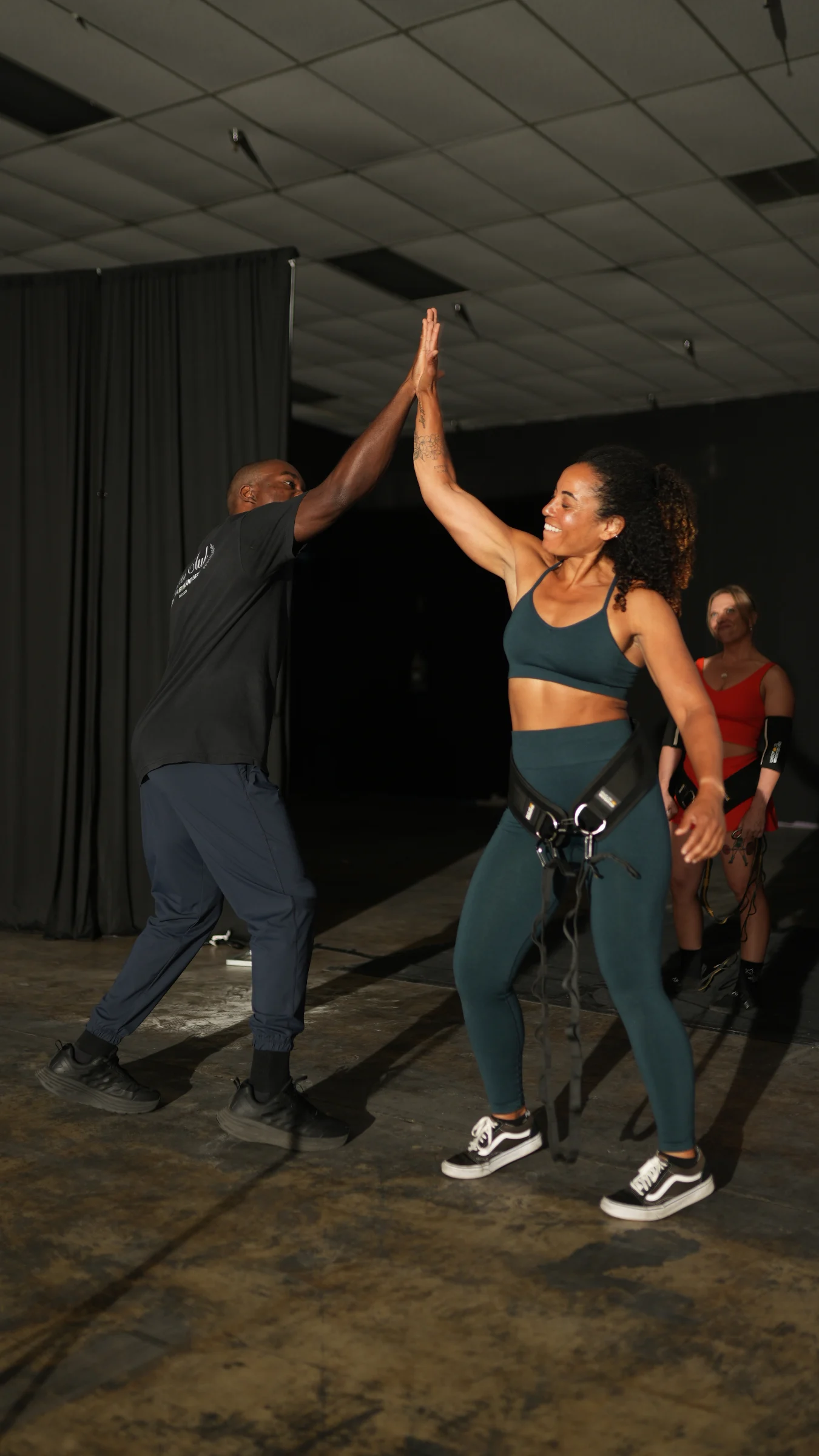
The physical rebuilding was only part of the adjustment.
Tahirih had managed her own training before coaching. She also had hypertrophy goals that mattered to her. Handing over some of that control meant learning new terminology, learning RPE, changing familiar routines, and, perhaps most difficult of all, learning how to rest.
One or two meaningful work sets did not always feel like enough.
Her instinct was understandable.
If she was doing less, how was that supposed to make her stronger?
But the point of the program was not to make every session as difficult as possible. It was to provide enough stimulus to adapt while keeping her healthy enough to accumulate training, develop better technique, build tolerance to load, and arrive at competition recovered.
Some strength was deliberately left untested.
That was not a limitation of the preparation.
It was part of it.
Learning How to Perform
Tahirih also had something in her background that helped more than she initially knew.
She had spent years performing dance and was familiar with what it meant to be watched, control her attention, and execute something she had rehearsed.
She brought some of that same approach into competition preparation.
During training, she would mentally rehearse the meet. Judges around her. Commands. The competition environment. The moment when it would be time to stop thinking and simply perform.
Her normal gym environment helped, too. People talked around her. People watched. Strangers sometimes approached her while she was training.
She had already learned how to bring her attention back to the movement.
Still, there was one part of competition she could not completely rehearse.
The people.
Her brothers and sister-in-law were coming after months apart. She would be meeting members of the streetlifting community in person for the first time. There would be new athletes, new conversations, and a completely different environment from her normal training.
She wondered whether she could be present with everyone while still staying focused on competing.
It turned out she could.
Her family understood when she needed space. The warm-up area gave her somewhere to separate herself from the noise.
And once another athlete was on the platform, attention naturally shifted toward them.
She did not have to choose between being social and being focused.
She learned how to do both.
The Third Attempt
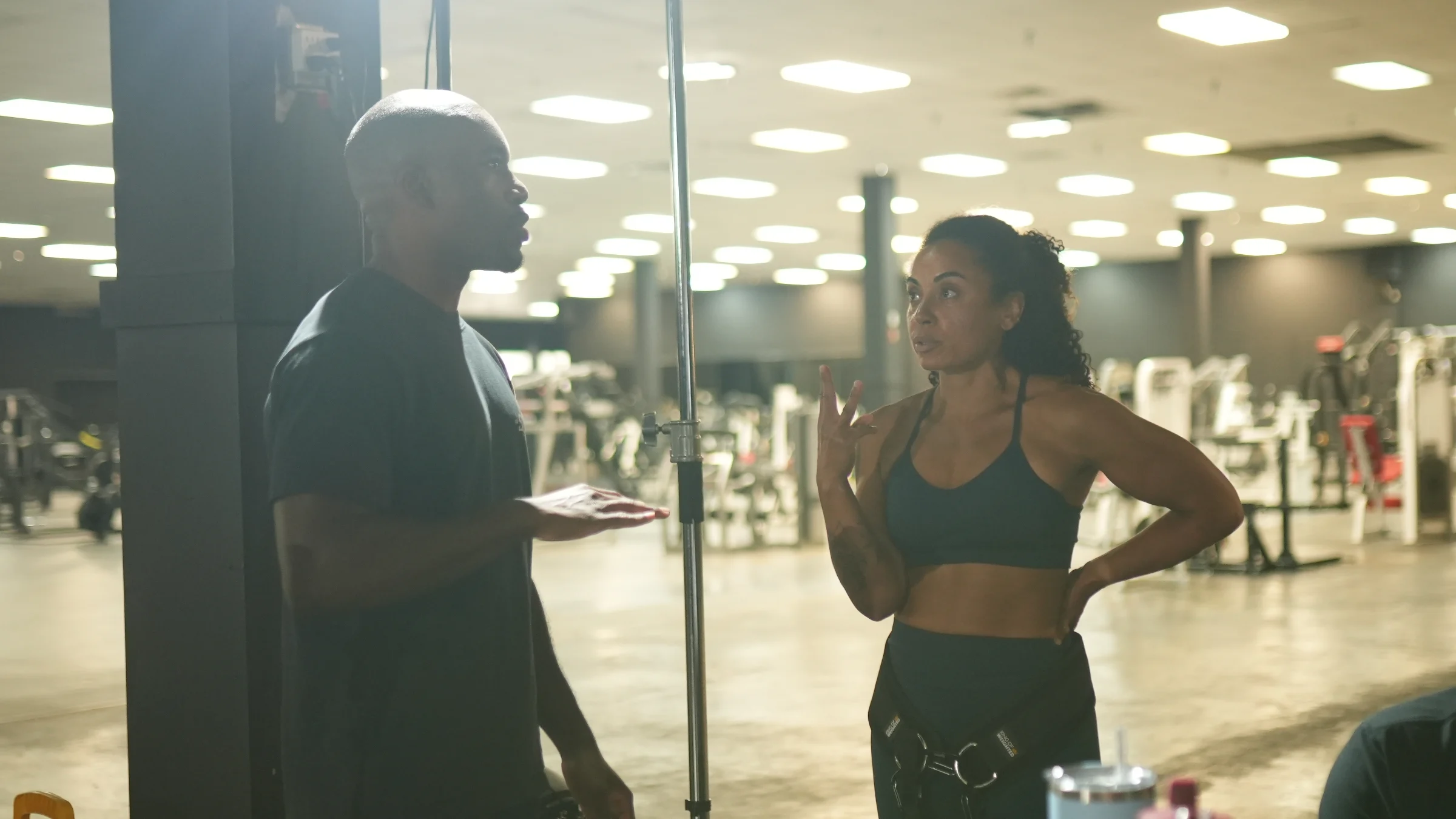
The first attempts were never supposed to be dramatic.
They were there to get on the board, experience the commands, settle the nerves, and establish a baseline.
The second attempts provided more information.
How fast was the weight moving? How did the technique look? How confident did she appear? Was the movement holding up under competition conditions?
Then came the decision that would define the day.
Tahirih's second weighted pull was exceptionally clean.
The speed was there. The technique was there. She was handling the environment. More importantly, she was showing strength that had not needed to be tested repeatedly in training.
The third attempt moved to 13.75 kg.
The number was a little higher than what had originally been written, but the platform had provided new information.
Now it was time to use it.
The message to Tahirih was simple: her form had been excellent, the strength was there, and she needed to concentrate and execute.
Her answer came without much hesitation.
“Yeah. I’m going to get this done.”
Then she did.
13.75 kg went up for a new personal record.
Her third weighted dip followed at 8.75 kg, another PR.
Six attempts. Six good lifts. Two personal records.
The Point Was Never the Perfect Day
Six-for-six is a good result.
But the value of the meet was not simply that Tahirih avoided mistakes.
She left with evidence.
She now knew she could handle competition commands. She could perform while people watched. She could manage the nerves and distractions of a new environment. She could trust her preparation. And when the opportunity came to take a heavier third attempt, she could trust herself enough to say yes.
That is a different kind of strength.
Tahirih described the result as a “good solid foundation of confidence, not arrogance.”
For a first competition, that may be more valuable than finding out her absolute limit.
A first meet does not have to answer every question about how strong an athlete can become.
Sometimes it only needs to answer one.
Can I compete?
For Tahirih, the answer is yes.
The Next Step
There was no reason to change everything after RVA.
There were still technical details to improve. Her dip, for example, could eventually become more efficient. But competition week was not the time to rebuild a movement that was already working.
The better approach was simple:
Compete with the technique you trust. Collect the evidence. Refine afterward.
Now Tahirih has a new starting point.
She wants her first Ring Muscle-Up. She wants more strength on the weighted pull and dip. She wants to return to back squat training with greater confidence. She wants to become more involved in the streetlifting community and eventually compete at Classic Nationals.
She does not know exactly where that path will end.
She is not sure she needs to.
Her first competition gave her something better than a prediction.
It gave her experience.
And when she was asked whether the experience changed how she sees herself as an athlete, her answer was immediate.
“I believe in myself even more.”
That may be the real result of the first competition.
Not knowing exactly how far you can go.
Knowing that you are ready to find out.
Prepare for Your First Streetlifting Meet
The First Meet Survival Kit walks athletes through the key details needed to prepare for meet day.