The Four Competition Lifts in Streetlifting
Streetlifting competition includes four judged lifts: the pull-up or chin-up, the dip, the back squat, and the muscle-up. Learn how each lift works, which format it appears in, and what makes it a competition lift.
If you're new to streetlifting, it's easy to think the sport is simply about lifting the most weight on pull-ups and dips. That's only part of the picture.
Every lift in streetlifting is a judged event. Strength gets you onto the platform, but the judging standards determine whether your lift counts. A rep that would earn cheers in the gym might receive three red lights in competition. Understanding the four competition lifts is the first step toward training for the sport instead of just training around it.
Classic vs. All 4: Two Ways to Compete
Streetlifting competitions are offered in two formats. Classic consists of two lifts: the Weighted Pull followed by the Weighted Dip. All 4 expands the competition to include four lifts in this order: Weighted Muscle-Up, Weighted Pull, Weighted Dip, and Back Squat. Regardless of the format, athletes receive three attempts for each lift. Your final score is based on your heaviest successful attempt in every event. If you fail to record a successful lift in any exercise, you cannot place in the overall standings, even though you're still allowed to complete the rest of the competition.
Classic is often the simplest way to experience your first competition because it focuses on two movements. All4 challenges athletes across a broader range of strength and skill.
The Weighted Pull
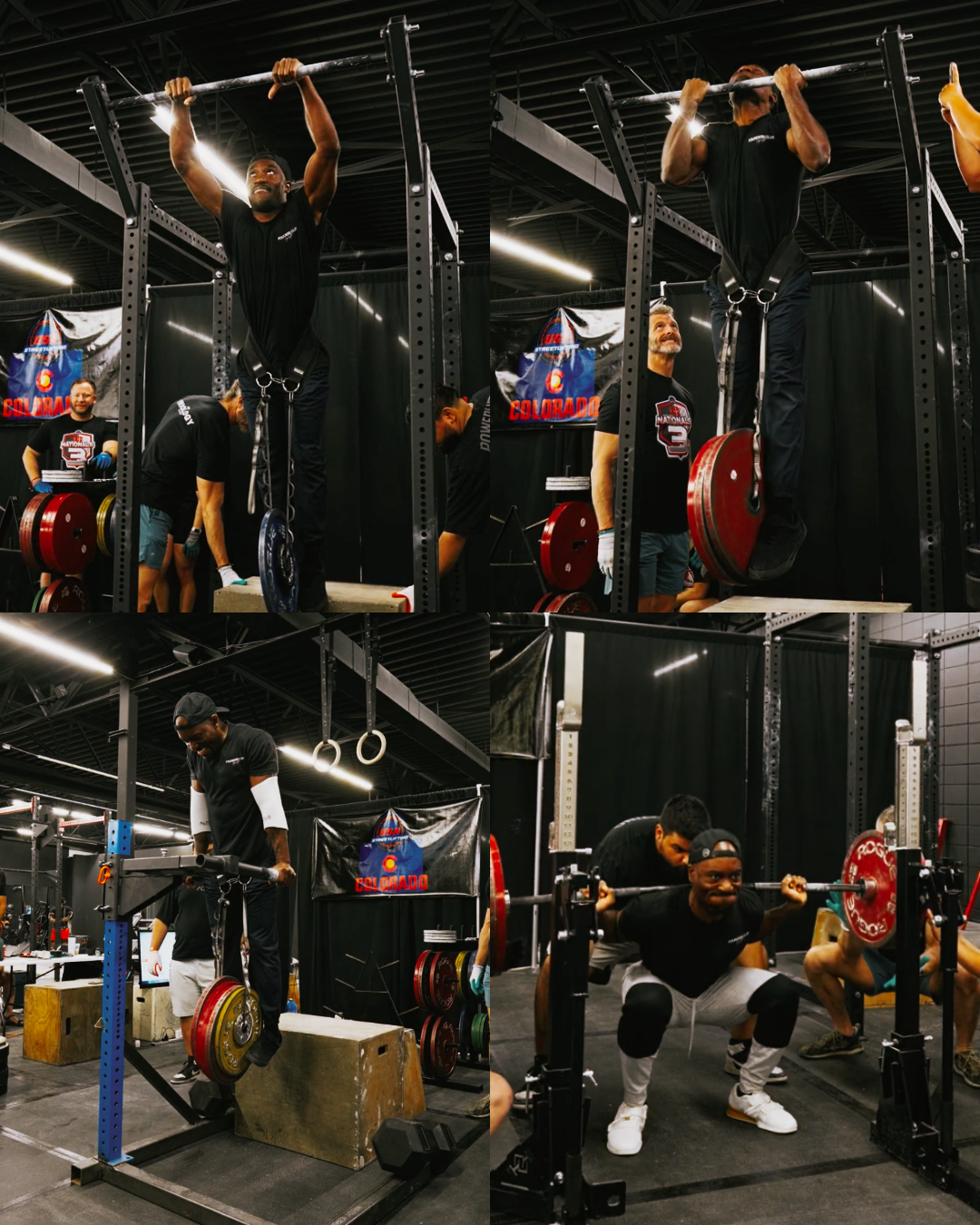
The weighted pull is the first event in Classic and the second event in All 4. Athletes perform a pull-up or chin-up while wearing a dip belt loaded with weight plates.
At first glance, it looks familiar. Most strength athletes have done weighted pull-ups before.
Competition changes the standard. Every repetition begins from a controlled dead hang with no momentum. Your chin must clearly finish above the bar before the lift can receive white lights from the judges. This is where many athletes are surprised. A heavy pull-up performed with a slight swing or an incomplete finish may feel successful, but it won't count on the platform.
Strength matters. Meeting the standard matters more.
The Weighted Dip
The weighted dip is the second lift in Classic and the third lift in All 4.
Like the pull, additional weight is attached using a competition-legal dip belt. Only the weight plates count toward your competition total.
A valid repetition begins from a fully locked-out position, reaches the required depth, and finishes with complete elbow lockout.
Many athletes perform dips in the gym every week, but recreational technique often falls short of competition requirements. Small details that seem unimportant in training become the difference between a successful lift and a no-rep.
Learning those standards early helps you build good habits long before meet day.
The Back Squat
The back squat appears only in the All 4 format.
For athletes coming from powerlifting, this lift will feel familiar. For athletes coming from calisthenics, it's often the biggest surprise in the sport. The squat follows strict judging standards. Athletes must reach competition depth, wait for the judge's commands, and stand the weight up under control before receiving permission to rack the bar. The squat is more than an added strength test. It rounds out the competition by measuring lower-body strength alongside upper-body performance. Because it follows official competition standards, practicing the commands and depth requirements is just as important as building a bigger squat.
The Muscle-Up: Bar or Ring
The muscle-up is the opening event of the All 4 competition.
For men, this is performed on a straight bar. Women compete on rings by default, although they may request to perform a bar muscle-up before the competition begins, according to current USASL rules. Unlike a recreational muscle-up, competition rewards control rather than creativity.
Athletes must establish the required starting position, complete the transition cleanly, and finish with full elbow lockout. Movements like a chicken wing or an incomplete finish that might be overlooked in training will not pass under competition judging.
The muscle-up is often the lift that reminds athletes they're competing in a judged strength sport, not simply demonstrating a skill.
Train for the Standard
Every competition lift tests a different quality, but they all share one thing in common: A lift only counts if it passes.
That idea changes how you train. Instead of chasing heavier numbers alone, you begin paying attention to positions, commands, consistency, and repeatable technique. The athletes who improve fastest are usually not the ones who get strongest first. They're the ones who learn the standards early and practice them every time they step under the bar or onto the platform.
If you're ready to go deeper, start with Article 4: Why Your Pull-Up Does Not Count in Streetlifting. It's the best place to understand what separates a strong gym rep from a successful competition lift.
Knowledge is the start.
Structured training is the next step.
SLU Guided Training gives you an assigned training track built for your level and your competition goals.