What is Streetlifting?
Streetlifting is a competitive strength sport built around four judged lifts. Here is how the sport is structured and what makes it different from weighted calisthenics.
Streetlifting is a competitive strength sport that combines weighted calisthenics with the structure of organized competition. Instead of simply seeing how much weight you can add to a pull-up or dip at the gym, athletes compete under official rules, perform their lifts in front of certified judges, and are scored on their heaviest successful attempts.
If you've come across videos of people doing massive weighted pull-ups or muscle-ups online, you were probably looking at streetlifting. But there's much more to the sport than lifting heavy. Every competition has rules, judging standards, weight classes, and a specific format that every athlete follows.
That's what separates streetlifting from regular gym training.
Streetlifting Is More Than Weighted Calisthenics
Many people assume streetlifting is just weighted calisthenics with a new name. It's not.
Weighted calisthenics is a style of training. Streetlifting is a sport.
Like powerlifting, streetlifting has official competitions, judges, attempts, and rankings. In the United States, the primary governing body is USA Streetlifting (USASL), where athletes compete in organized meets throughout the year.
Competition day follows a familiar structure. Athletes lift in flights, receive three attempts for each event, and only successful lifts count toward their final total.
The biggest difference between training and competing is that every repetition has to meet the official standard.
A rep that feels good in the gym might not count on the competition platform.
The Four Competition Lifts
Streetlifting is built around four official lifts:
- Weighted Pull (Pull-Up or Chin-Up)
- Weighted Dip
- Back Squat
- Weighted Muscle-Up (Bar or Rings)
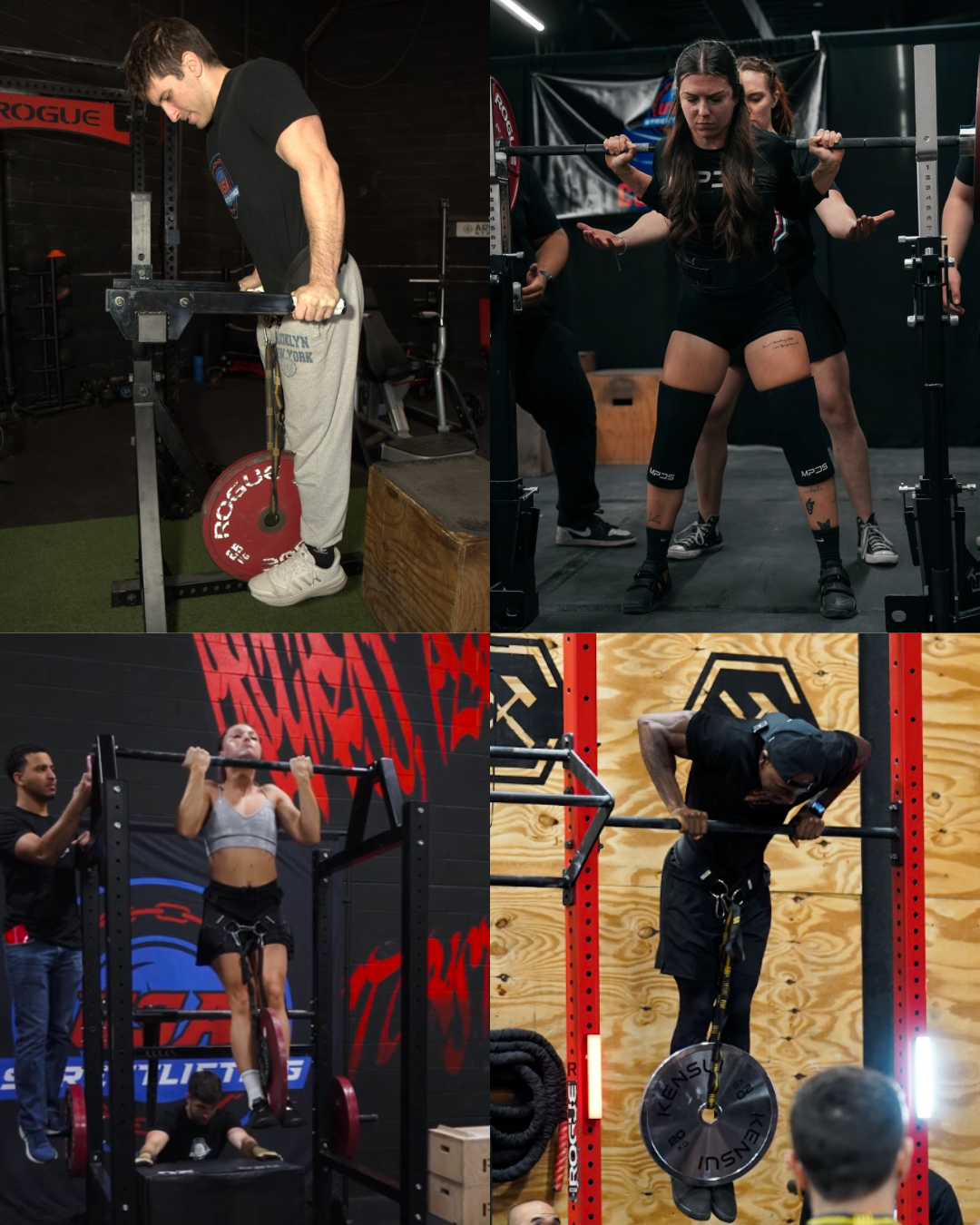
Each lift measures a different quality of strength, and each has its own judging standard.
The goal isn't simply to complete the movement. It's to perform it exactly the way the rulebook requires.
That distinction catches many first-time competitors by surprise.
An athlete may have spent months getting stronger on weighted pull-ups, only to discover at their first meet that their reps don't satisfy the competition standard. The strength is there, but the lift doesn't count.
In streetlifting, both strength and execution matter.
How Competitions Work
There are two primary competition formats.
Classic includes two lifts:
- Weighted Pull
- Weighted Dip
All4 includes all four competition lifts:
- Weighted Muscle-Up
- Weighted Pull
- Weighted Dip
- Back Squat
Athletes receive three attempts for every lift. Their score is calculated using the heaviest successful attempt from each event.
Competitors also lift within bodyweight classes, allowing athletes of different sizes to compete fairly.
If you've watched a powerlifting meet before, the flow will feel familiar. The movements are different, but the competition structure is very similar.
The Standards Are the Sport
This is the most important thing to understand about streetlifting.
Getting stronger is only part of the process.
Learning the standards is what makes someone a streetlifting athlete.
Every lift is judged. If a movement doesn't satisfy the official criteria, it receives a no-lift, regardless of how heavy it was.
That's why experienced competitors spend just as much time refining their technique as they do building strength. The standards aren't obstacles. They're the foundation of the sport.
Once you understand that, your training starts to look very different.
Where to Learn More
Streetlifting has a learning curve, but that's part of what makes it rewarding. The more you understand the rules and standards, the more purposeful your training becomes.
Here at Streetlifting University, SLU Learn is organized to help you build that understanding step by step.
The best place to continue is The Four Competition Lifts in Streetlifting, where you'll learn what each lift tests and why the judging standards matter.
If you're still exploring the sport, you're also welcome to join the free SLU community and continue learning alongside athletes preparing for their first competition and beyond.
Articles teach principles.
Coaching makes the decisions.
When you are ready for individualized coaching decisions made for you, the next step is an application.